
How to Identify Real Sterling Silver: 7 Proven Tests
October 11, 2026 Share LinkTable of Contents
- Understanding Sterling Silver Hallmarks
- How to Identify Real Sterling Silver vs Silver Plated
- Simple Tests to Perform at Home
- Does Sterling Silver Tarnish and What It Tells You
- When to Seek Professional Appraisal
- Frequently Asked Questions
Last Updated: 11 October 2026
Understanding Sterling Silver Hallmarks
Sterling silver is marked with specific stamps that help you identify real sterling silver and tell you exactly what you're buying. The most important hallmark to look for is the 925 stamp, which indicates that the piece contains 92.5% pure silver and 7.5% other metals (usually copper for durability).
Understanding these marks protects you from buying silver-plated jewellery by mistake. At Namana, we ensure every sterling silver piece carries the proper hallmark so customers know they're getting genuine quality.
What the 925 stamp means
The 925 hallmark is the international standard for sterling silver. It means the piece is at least 92.5% pure silver by weight. The remaining 7.5% consists of other metals that strengthen the silver, making it suitable for everyday wear.
This ratio has been used for centuries. Pure silver alone is too soft for jewellery, it bends and scratches easily. By adding copper and other metals, the silver becomes durable enough to hold gemstones and maintain its shape through regular use.
When you see 925 on a piece, you can trust it meets legal standards across most countries. This stamp is your guarantee of genuine sterling silver quality.
UK and international hallmark standards
In the UK, the Hallmarking Act requires all precious metal jewellery to be tested and marked by an official assay office (Hallmarking: practical guidance - summary).
Different countries use slightly different marking systems, but 925 remains the universal standard for sterling silver. European pieces may show additional marks indicating where they were tested. American silver sometimes carries the word "STERLING" instead of just the number.
When buying sterling silver jewellery, always check for these marks on the back or inside of the piece. They're usually small but clearly visible.
Watch Out Pieces without proper hallmarks may be silver-plated or contain less silver than claimed. Always inspect the marking before purchasing.How to Identify Real Sterling Silver vs Silver Plated
The difference between sterling silver and silver-plated jewellery matters for durability and value. Sterling silver is solid throughout, while silver-plated jewellery has only a thin layer of silver coating a base metal like brass or stainless steel.
Silver-plated pieces wear away over time. The base metal underneath eventually shows through, especially on areas that receive friction. Sterling silver, by contrast, maintains its integrity with proper care.
Namana offers both 925 sterling silver and fashion jewellery options so customers can choose what suits their budget and lifestyle. Understanding the difference helps you make an informed decision about which type works best for you.
The key distinction is thickness and composition. Sterling silver is solid metal throughout, meaning it won't wear through. Silver-plated jewellery has a microscopically thin layer of silver bonded to a base metal. Once that layer wears away, the base metal shows through and the piece loses its appearance.
Look at the edges and any worn areas on a piece. If you see a different colour underneath the silver, it's likely plated. Sterling silver looks the same all the way through.
Simple Tests to Perform at Home
Testing sterling silver at home is straightforward. Several quick methods can confirm whether a piece is genuine before you commit to wearing it or giving it as a gift.
The magnet test
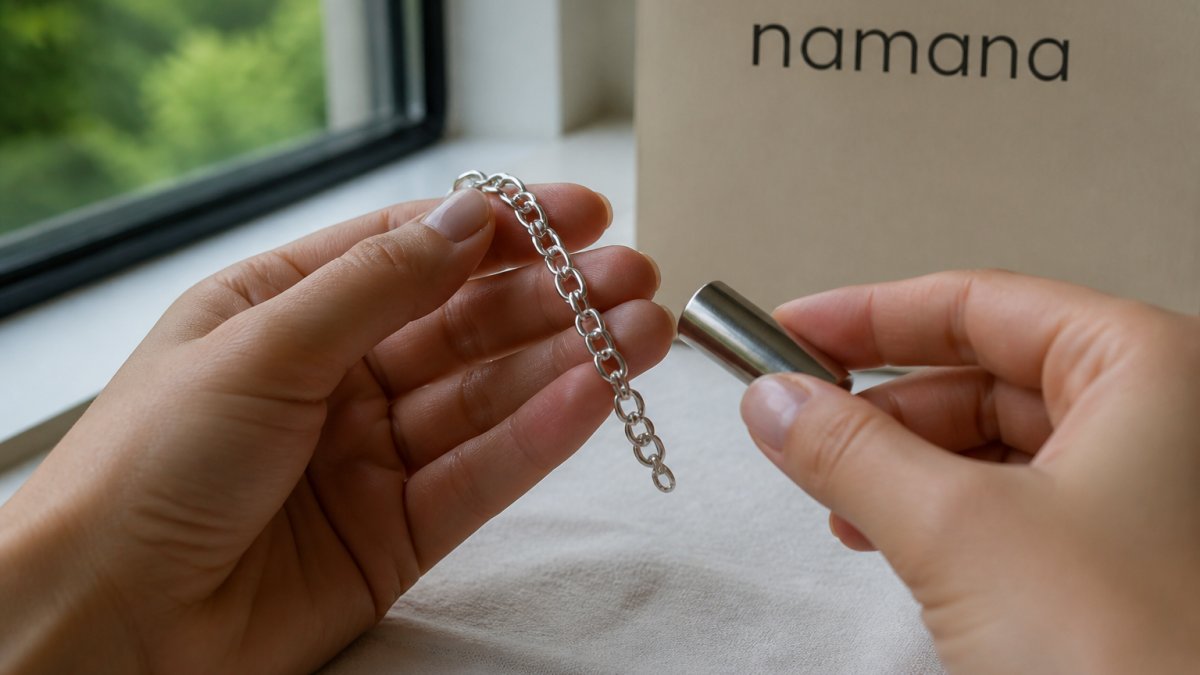
Sterling silver is non-magnetic. If a magnet attracts the piece strongly, it contains iron or other ferrous metals and is not genuine sterling silver.
Hold a strong magnet near the jewellery. Real sterling silver won't stick to it. If the piece jumps towards the magnet or clings to it, the base metal is likely iron or steel, which means it's either plated or a different alloy altogether.
This test works because the copper and other metals mixed with sterling silver are non-magnetic. If magnetism is present, something else is in the piece.
Pro Tip Use a neodymium magnet for the strongest test. These are available cheaply online and work better than standard fridge magnets.The sound test
Sterling silver produces a clear, bell-like ring when struck gently. Tap the piece lightly with another piece of metal or a small tool and listen carefully.
Real sterling silver rings with a clear, sustained tone that fades slowly. Other types of jewellery may produce a dull thud that stops quickly.
This test takes practice to master, but once you've heard the difference, it becomes obvious. The purity of the metal affects how it vibrates and resonates.
Visual inspection techniques
Examine the piece closely under good lighting. Look for the 925 hallmark, maker's mark, and assay office mark. These should be clearly stamped into the metal.
Check the colour and finish. Real sterling silver has a consistent silvery-white appearance. Tarnish appears as dark spots or a greyish coating, but underneath the tarnish, the metal is still uniformly silver-coloured.
Look at any worn edges or clasps. On genuine sterling silver, the colour remains consistent throughout. On plated jewellery, you'll often see a different colour peeking through where the plating has worn away.
Run your finger over the surface. Sterling silver feels smooth and consistent. Costume jewellery sometimes has a slightly rough or uneven texture.
Does Sterling Silver Tarnish and What It Tells You
Sterling silver tarnishes naturally over time. This is actually a sign that your jewellery is genuine. The tarnish forms when the silver reacts with sulphur compounds in the air and moisture.
Tarnish appears as dark spots, streaks, or a greyish coating on the surface. This doesn't mean the silver is damaged, it's simply a chemical reaction. The metal underneath remains pure and undamaged.
Silver-plated jewellery and costume jewellery can also tarnish, but the pattern differs. On genuine sterling silver, tarnish develops evenly across the entire piece. On plated jewellery, tarnish often appears first in areas where the plating has worn through.
The ability to clean and restore tarnished sterling silver is one of its advantages. A simple polish removes the tarnish and returns the piece to its original shine. This cycle can repeat indefinitely because the metal is solid all the way through.
When to Seek Professional Appraisal
For expensive pieces or antique jewellery, professional appraisal provides definitive confirmation of authenticity and value. A qualified jeweller has specialised equipment that can test purity beyond what home tests allow.
Professional testing includes acid tests, which measure the exact silver content.
If you're buying an expensive piece or inheriting vintage jewellery, professional appraisal is worth the investment. It protects you against fraud and helps you understand what you own.
Frequently Asked Questions
What does 925 mean on sterling silver?
The 925 stamp indicates that the piece contains 92.5% pure silver and 7.5% other metals, usually copper. This ratio defines sterling silver and meets the hallmarking standards required in the UK and internationally. Any genuine sterling silver jewellery should bear this mark or an equivalent hallmark showing its silver content.
How can you tell sterling silver from silver plate?
Sterling silver is solid throughout, whilst silver-plated items have only a thin silver coating over a base metal. You can tell the difference by checking for hallmarks (sterling silver will have 925 or similar), examining edges or worn areas where the base metal may show through, and using the magnet test, some silver-plated items may be attracted to a magnet if their base metal is ferrous, whilst pure sterling silver is not.
Can you test sterling silver at home without damaging it?
Yes. Safe home tests include the magnet test (sterling silver is not magnetic), the sound test (genuine silver produces a clear, bell-like tone when gently struck), and visual inspection of hallmarks. These tests won't harm your jewellery and give reliable results.
Does real sterling silver tarnish, and is that a sign of quality?
Yes, genuine sterling silver does tarnish over time due to exposure to air and moisture. Tarnishing is actually a sign of authenticity, it proves the piece is real silver. Silver-plated items may not tarnish in the same way because the base metal underneath doesn't react. Regular cleaning keeps sterling silver looking bright and beautiful.
Knowing how to identify real sterling silver protects your investment and ensures you're getting genuine quality. Whether you're building a personal collection or shopping for meaningful gifts, these tests give you confidence in your purchase. At Namana, every sterling silver piece is properly hallmarked and tested to guarantee authenticity. Shop now and invest in jewellery that's built to last.
Shop Now Back to blog