
How to Store Silver Jewellery Properly at Home
November 4, 2026 Share LinkLast Updated: November 4, 2026
Quick Summary
To store silver jewellery properly, clean and dry each piece first, then keep it in a cool, dry place sealed in a box, pouch or bag. This limits air and moisture, the two main causes of tarnish, and keeps your pieces bright for longer.
- Wipe each piece with a soft, dry cloth to remove oils, dust and residue.
- Make sure every piece is completely dry before you store it.
- Keep pieces away from bathrooms, damp cupboards and direct sunlight.
- Add an anti-tarnish strip inside the storage container for extra protection.
- Hang necklaces or keep them separate so chains don't tangle.
Table of Contents
- Why Silver Jewellery Tarnishes and How Storage Slows It
- How to Prepare Silver Jewellery for Storage
- Choosing the Best Way to Store Sterling Silver Jewellery
- How to Prevent Silver Jewellery from Tarnishing
- How to Store Silver Necklaces Without Tangling
- Storage Advice by Jewellery Type and Long-Term Storage
- How to Clean Sterling Silver at Home Before Storing It
- Choosing Your Next Namana Piece and Keeping It Protected
- Frequently Asked Questions
Why Silver Jewellery Tarnishes and How Storage Slows It
Silver jewellery tarnishes when it reacts with oxygen, moisture and sulphur compounds in the air. This creates a dull, dark layer on the surface. Good ways to store silver jewellery slow that reaction down, which keeps your pieces bright for longer. Find out how tarnished silver can also affect skin in why silver jewellery can turn skin green.
Sterling silver is 92.5% silver, with the rest usually copper. The right storage habits do a lot of the prevention work for you.
Store your pieces in a cool, dry place away from bathrooms, damp cupboards and direct sunlight. Keep them sealed or covered so less air reaches the metal.
How to Prepare Silver Jewellery for Storage
Clean and dry each piece before it goes away. Skin oils, perfume and lotion residue speed up tarnishing, so storing a dirty piece locks in the problem.
Follow these steps:
- Wipe each piece with a soft, dry cloth to remove oils and dust.
- Remove any perfume, hairspray or lotion residue first.
- Make sure every piece is completely dry before you store it.
- Take off pieces before swimming, showering or using cleaning products.
Once a piece is clean and dry, you can put it straight into its storage spot.
Choosing the Best Way to Store Sterling Silver Jewellery
The right storage method depends on how often you wear your pieces, how much space you have, and whether the piece is plain silver or set with gemstones. If you are weighing up sterling silver and costume jewellery, this guide helps you compare the two. The aim is always the same: limit air and moisture, and stop pieces from knocking into each other.
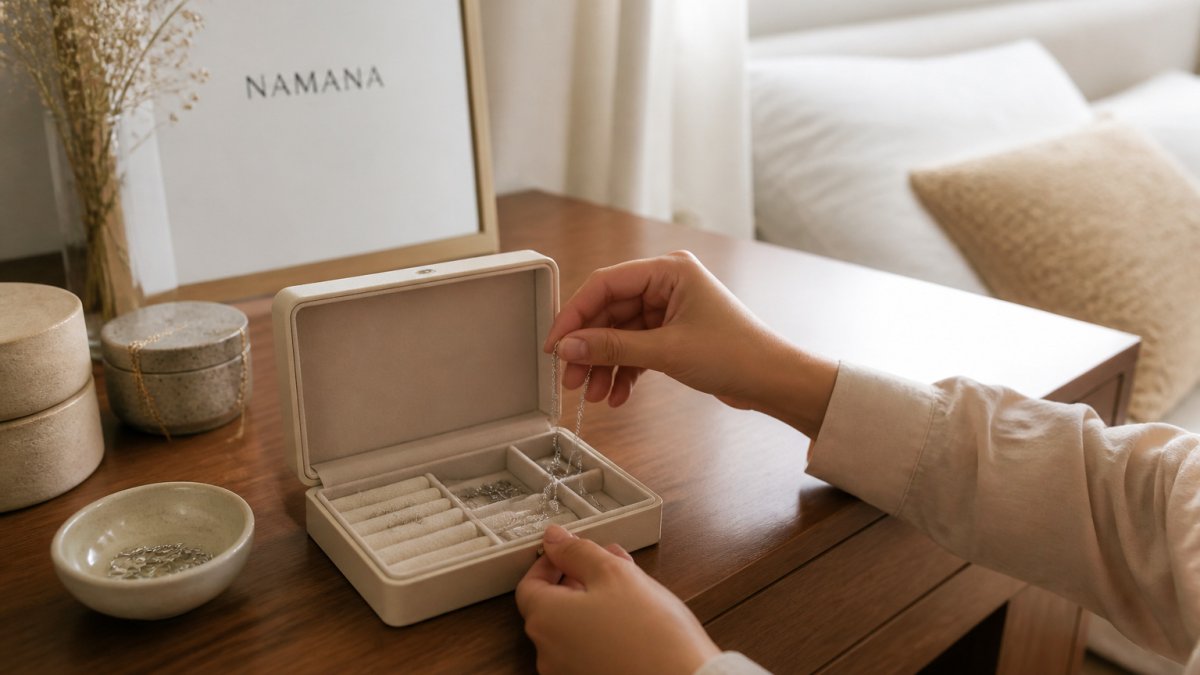
!Hands placing a sterling silver necklace into a lined jewellery box on a wooden dresser in a bright, dry bedroom (image placeholder)
Jewellery boxes, pouches and sealed bags compared
Each option has strengths and trade-offs. Use this guide to match the container to the piece:
| Storage option | Best for | Main benefit | Watch out for |
|---|---|---|---|
| Lined jewellery box | Everyday and special-occasion pieces | Keeps pieces separated and out of sight | Air can still circulate unless the lid seals well; fabric linings may absorb moisture over time |
| Fabric pouch | Travel and single pieces | Soft protection against scratches | Does little to block air or moisture; not ideal for long-term storage |
| Sealed zip-lock bag | Limiting air exposure | Reduces contact with air and moisture | Traps any residual moisture if the piece is not completely dry; can be awkward for daily use |
| Anti-tarnish pouch or strip | Long gaps between wears | Absorbs sulphur compounds in the air | Needs replacing periodically; effectiveness fades once saturated |
A lined box with a tight-fitting lid works well for daily storage, but check that pieces are fully dry before closing it. Sealed bags are a good choice when you want to cut down air exposure quickly, provided the piece is bone dry.
Storing silver with gemstones or coatings
Gemstones and coatings need a little more care. Keep them away from harder pieces that could scratch them, and wrap them separately so the finish stays intact for longer.
How to Prevent Silver Jewellery from Tarnishing
Tarnish is easier to prevent than to remove, but even careful storage can fail if a hidden factor is at play. These habits make the biggest difference:
- Store pieces in a cool, dry place.
- Keep them sealed in a box, pouch or bag.
- Add an anti-tarnish strip inside the storage container.
- Wear your silver, then wipe and store it straight after.
- Avoid storing silver near rubber, wool or certain cardboard, which can release sulphur.
If a piece still tarnishes despite careful storage, work through the likely causes rather than assuming the storage method is wrong. A common pattern is residual moisture, so leave a piece to air-dry for longer before sealing it away. Keep jewellery away from household chemicals and cosmetics, and check that the storage spot is not damp.
How to Store Silver Necklaces Without Tangling
Necklaces tangle easily, especially fine chains. Hanging them is one of the simplest fixes. For more ideas, see tips for layering necklaces without tangling. Each chain should hang on its own.
If you store necklaces flat, lay them in a separate compartment or pouch. Never toss them loosely into a drawer with other jewellery. Keep pendants and clasps facing outward so they don't catch on chains.
Storage Advice by Jewellery Type and Long-Term Storage
Different pieces need different handling:
- Rings: Store in individual slots so they don't scratch each other.
- Earrings: Keep pairs together, with studs and hoops separated.
- Bracelets: Lay flat in a compartment, or hang on a hook.
- Necklaces: Hang or keep separate, as described above.
For long-term or seasonal storage, such as during a holiday or a move, keep pieces dry and sealed away from air. Check them every few months, and give them a gentle clean if you spot any dullness.
How to Clean Sterling Silver at Home Before Storing It
If a piece is already tarnished, clean it before you store it. Rub gently in straight lines with a soft cloth until the surface brightens.
For heavier tarnish, follow these steps:
- Mix warm water with a small amount of mild washing-up liquid.
- Soak the piece for a few minutes, then rinse well.
- Dry it thoroughly with a soft cloth.
- Store it in your chosen container straight away.
Avoid harsh abrasives, which can scratch the surface. Always dry completely before storing.
Choosing Your Next Namana Piece and Keeping It Protected
Storing your silver well is one way to keep it looking its best for years. Namana offers 925 sterling silver pieces designed for everyday wear and special occasions. You can browse a sterling silver pendant necklace set with cubic zirconia stones that suits careful, long-term storage. Browse the collection to find your next favourite piece, and store it using the methods above so it stays bright.
Frequently Asked Questions
How should I store silver jewellery to prevent tarnishing?
Keep silver in a cool, dry place away from bathrooms, direct sunlight and perfume. Wipe pieces completely dry before storing them, then place each one in a covered container. Limiting air and moisture exposure is what slows tarnish most, so a closed box in a stable room beats an open dish on a dressing table.
Should silver jewellery be stored in airtight bags?
Sealed bags and airtight containers work well because they limit contact with air and humidity, the two main drivers of tarnish. Make sure the piece is fully dry first, otherwise trapped moisture will speed up oxidation. Zip-lock bags with the air pressed out are a practical, inexpensive option for everyday storage.
Is it better to store silver jewellery separately?
Yes. Keeping each piece in its own pouch or compartment prevents scratches on polished surfaces and stops chains and clasps from knotting together. Separation is especially useful for delicate necklaces and for any piece with gemstones, which can be marked by harder metals or by other jewellery rubbing against them.
What causes sterling silver jewellery to tarnish?
Tarnish is a surface reaction called oxidation, which happens when sterling silver meets oxygen, moisture, heat and certain chemicals such as perfume or cleaning products. Storing pieces dry, cool and sealed away from these triggers slows the process considerably, although it cannot stop it entirely over the long term.
Shop Now Add namana.london as a preferred source on Google →
Back to blog