
Is 925 Sterling Silver Hypoallergenic? UK Guide
October 16, 2026 Share LinkTable of Contents
- Is 925 Sterling Silver Hypoallergenic? The Short Answer
- Sterling Silver Allergy Symptoms: What a Reaction Actually Looks Like
- 925 Sterling Silver Nickel Content: Why the 7.5% Matters
- How to Tell If Sterling Silver Is Genuine Before You Buy
- Sterling Silver Earrings for Sensitive Ears: What to Look For
- Choosing Hypoallergenic Jewellery: A Step-by-Step Approach
- Conclusion
- Frequently Asked Questions
Last Updated: 16 October 2026
Is 925 Sterling Silver Hypoallergenic? The Short Answer
Yes, 925 sterling silver is generally considered hypoallergenic for most people. This guide from Namana explains what that means in practice, where reactions come from, and how to shop with confidence.
The term "hypoallergenic" means a product is less likely to cause an allergic reaction. It does not mean "zero risk". Sterling silver earns that label because its main ingredient is silver itself, which very few people react to.
So where do reactions come from? Almost always the other metals mixed in. Sterling silver is 92.5% pure silver and 7.5% other metals, usually copper. That small share is what matters most.
Below, we break down the symptoms to watch for, the role of nickel, and how to choose pieces that suit sensitive skin.
Sterling Silver Allergy Symptoms: What a Reaction Actually Looks Like
Sterling silver allergy symptoms usually appear as redness, itching, or a rash where the jewellery touches the skin. Symptoms often show up within hours, though some people notice them after a day or two.

Watch for these signs:
- Red, raised patches under a ring or earring
- Itching or a burning feeling
- Dry, flaky, or cracked skin
- Small blisters or weeping patches in severe cases
- Skin that darkens or discolours
A green or black mark on your skin is not an allergy. That is tarnish reacting with your skin's natural oils and sweat. It wipes off and causes no harm.
A true allergy tends to get worse with each exposure. If a patch spreads or blisters, stop wearing the piece and speak to a pharmacist or GP.
Why Your Ears React to Sterling Silver Earrings
Ear piercings are the most common site for reactions, and the reason is simple. An earring sits inside an open channel of skin, so the metal touches tissue directly rather than resting on the surface.
Pierced ears also trap moisture and dead skin, which speeds up irritation. Cheap studs with nickel bases are a frequent culprit. Even a thin plating can wear through and expose the metal underneath.
That is why many people who react to fashion earrings can still wear good-quality sterling silver studs with no trouble at all.
925 Sterling Silver Nickel Content: Why the 7.5% Matters
Most 925 sterling silver contains little to no nickel. The 7.5% is typically copper, added to give silver strength and durability. Pure silver is too soft for everyday wear on its own.
Nickel is the metal behind most jewellery allergies. It is cheap, hard-wearing, and common in plated and base-metal pieces. The good news is that sterling silver rarely uses it.
The risk creeps in through plating. A silver piece finished with a nickel layer can trigger a reaction once that layer wears thin. Look for rhodium plating instead, which adds a protective layer and helps reduce tarnishing.
If you have a known nickel allergy, ask the seller to confirm the alloy before you buy.
How to Tell If Sterling Silver Is Genuine Before You Buy
Learning how to tell if sterling silver is genuine protects both your skin and your money. The simplest check is the hallmark.
Look for these markers:
925 Sterling Silver Triangle Stud Earrings for Women →
- A "925" stamp, often inside a ring band or on an earring post
- A maker's mark or sponsor's mark
- A fineness mark on UK hallmarked pieces
- A consistent colour with no flaking or peeling
In the UK, items above a certain weight must carry a hallmark from an assay office (Hallmarking: practical guidance - summary). This is a legal guarantee of purity, not a marketing claim.
A magnet is a rough test. Silver is not magnetic, so a piece that sticks is likely plated base metal. This test is not foolproof, though, since some alloys behave oddly.
For full peace of mind, ask the retailer for written confirmation of the 925 grade.
Sterling Silver Earrings for Sensitive Ears: What to Look For
Sterling silver earrings for sensitive ears should have a solid silver post, a smooth finish, and no nickel in the plating. These three details prevent most reactions.
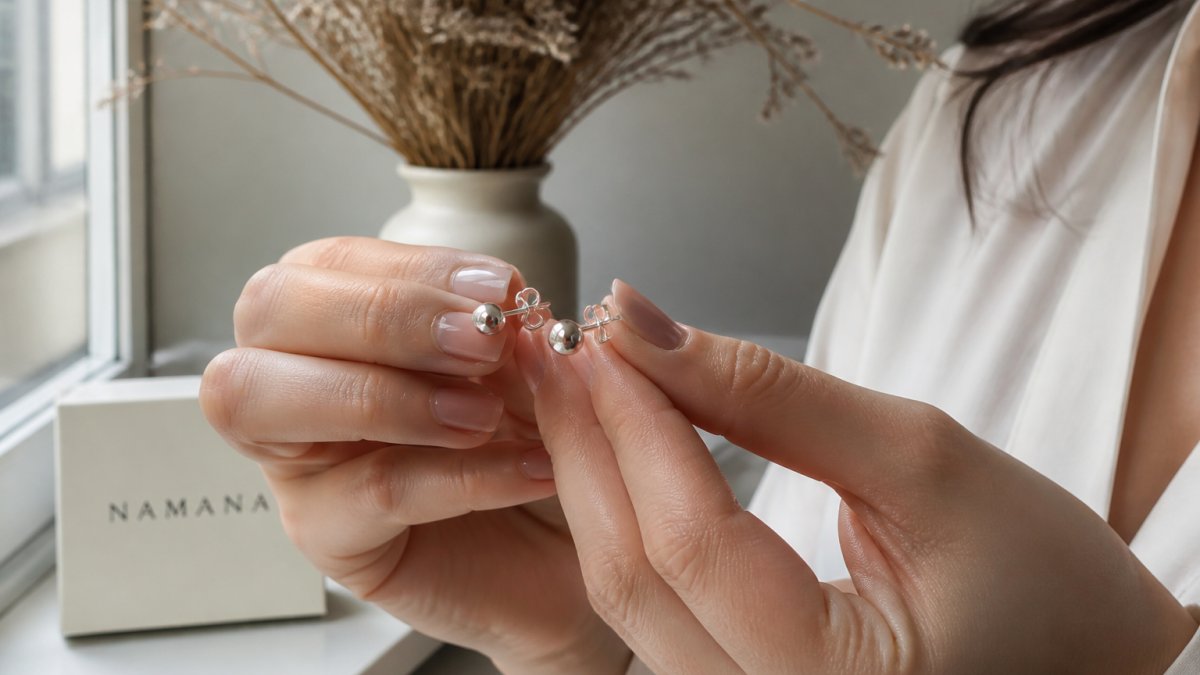
Namana's sterling silver studs are rhodium plated, which adds a protective layer to reduce tarnishing and keep a long-lasting shine. The range includes small, lightweight designs that suit everyday wear, from the 925 Sterling Silver Triangle Stud Earrings at £23.99 to the 925 Sterling Silver Honeycomb Stud Earrings at £24.99.

Keep these points in mind:
- Choose studs over heavy drop earrings for daily wear
- Check that posts are solid silver, not just the front
- Avoid tight backs that rub the skin
- Clean earrings regularly to remove build-up
Lightweight studs put less pressure on the piercing, which lowers the chance of irritation.
Choosing Hypoallergenic Jewellery: A Step-by-Step Approach
Picking hypoallergenic jewellery comes down to checking materials, finishes, and fit before you commit. This short process works for any budget.
- Check the base metal. Solid sterling silver, stainless steel, and brass are common safe choices.
- Look at the plating. Rhodium plating protects the surface and reduces tarnish.
- Confirm the hallmark. A 925 stamp shows the piece is what it claims to be.
- Start with one piece. Wear it for a day to see how your skin responds.
- Keep it clean. Wipe pieces after wear to remove oils and sweat.
- Store it dry. Moisture speeds up tarnish and irritation.
Costume jewellery can work well too. Many brass and stainless steel designs suit sensitive skin, especially when the finish is smooth and well made. The key is the same: know what is touching your skin.
Pro Tip A common mistake is testing several new pieces at once. If a reaction appears, you will not know which item caused it. Try one piece at a time, on one area, for a full day before adding another.Conclusion
Sensitive skin does not have to mean giving up on beautiful jewellery. Sterling silver is a smart, gentle choice for most people, and knowing what to check makes the decision simple.
At Namana, every piece is made from high-quality 925 sterling silver, rhodium plated to reduce tarnishing and keep its shine. With free UK delivery and no minimum spend, it is easy to start with one pair of studs and see how your skin responds.
Shop the sterling silver collection at Namana and find a piece that feels as good as it looks.
Frequently Asked Questions
Can you be allergic to 925 sterling silver?
Yes, though it is uncommon. A true allergy to silver itself is rare. Most reactions attributed to sterling silver come from the small amount of other metals it contains, particularly copper or nickel. If you notice redness, itching, or a rash where your jewellery touches your skin, it is worth identifying the specific trigger. A dermatologist can help confirm whether you are reacting to the metal or to something else, such as a perfume or soap residue left on the piece.
Does sterling silver contain nickel?
Sterling silver is made of 92.5% pure silver and 7.5% other metals, usually copper. Nickel is not a required part of the alloy, but trace amounts can appear depending on the refining process. The risk is higher with plated or costume jewellery, where a nickel-based layer may sit beneath the surface. If you have a known nickel sensitivity, look for pieces described as nickel-free or rhodium plated, which adds a protective barrier.
What should I do if sterling silver jewellery irritates my skin?
Remove the piece as soon as you notice irritation. Clean the area with mild soap and water, then pat dry. Avoid wearing the item again until you know the cause. Sometimes the issue is a build-up of dirt, lotion, or soap behind the jewellery rather than the metal itself. Give the piece a gentle clean with a soft cloth and mild soap. If irritation continues, try rhodium-plated sterling silver or switch to a different metal.
Is sterling silver better for sensitive skin than plated jewellery?
For most people with sensitive skin, solid 925 sterling silver is a better choice than plated jewellery. Plated pieces have a thin layer of another metal over a base, and that layer can wear away over time, exposing the metal underneath. Solid sterling silver is the same all the way through, so there is no coating to flake or fade. Rhodium-plated sterling silver adds an extra barrier, which can further reduce the chance of a reaction.
925 Sterling Silver Triangle Stud Earrings for Women Back to blog