

How to Clean Sterling Silver at Home: A Step-by-Step Guide
Quick Summary
To clean sterling silver at home, line a bowl with aluminium foil, add hot water and a tablespoon of bicarbonate of soda per cup, then soak the pieces for two to five minutes. Rinse under cool water and dry with a soft microfibre cloth. Avoid toothpaste, which contains abrasives that scratch the surface.
- Sterling silver is 92.5% pure silver and 7.5% copper.
- Tarnish is a dark silver sulphide film caused by sulphur in the air.
- Soak silver for two to five minutes, as longer soaking can leave a dull finish.
- Use only warm water and mild washing-up liquid on gemstone pieces.
- Store silver in an airtight bag and put jewellery on after perfume and lotion.
Table of Contents
What Causes Sterling Silver to Tarnish
Sterling silver is an alloy. It contains 92.5% pure silver and 7.5% copper, which gives it strength for everyday wear. That copper content is also part of why pieces can dull over time.
When silver meets sulphur in the air, a chemical reaction takes place. The silver turns into silver sulphide, a dark layer that appears as a grey or black film on the surface. This process is called tarnish. Humidity, heat, and contact with skin oils can speed it up. Silver sulphide is not harmful, but it makes your jewellery look dull.
Tarnish is a surface change. Cleaning removes the film and brings back the shine, which is why regular care matters more than a single deep clean.
- Sulphur in the air reacts with the silver
- Humidity and moisture speed up the process
- Skin oils, perfume, and lotions leave residue that attracts tarnish
- Copper in the alloy reacts more readily than pure silver
What You'll Need Before You Start
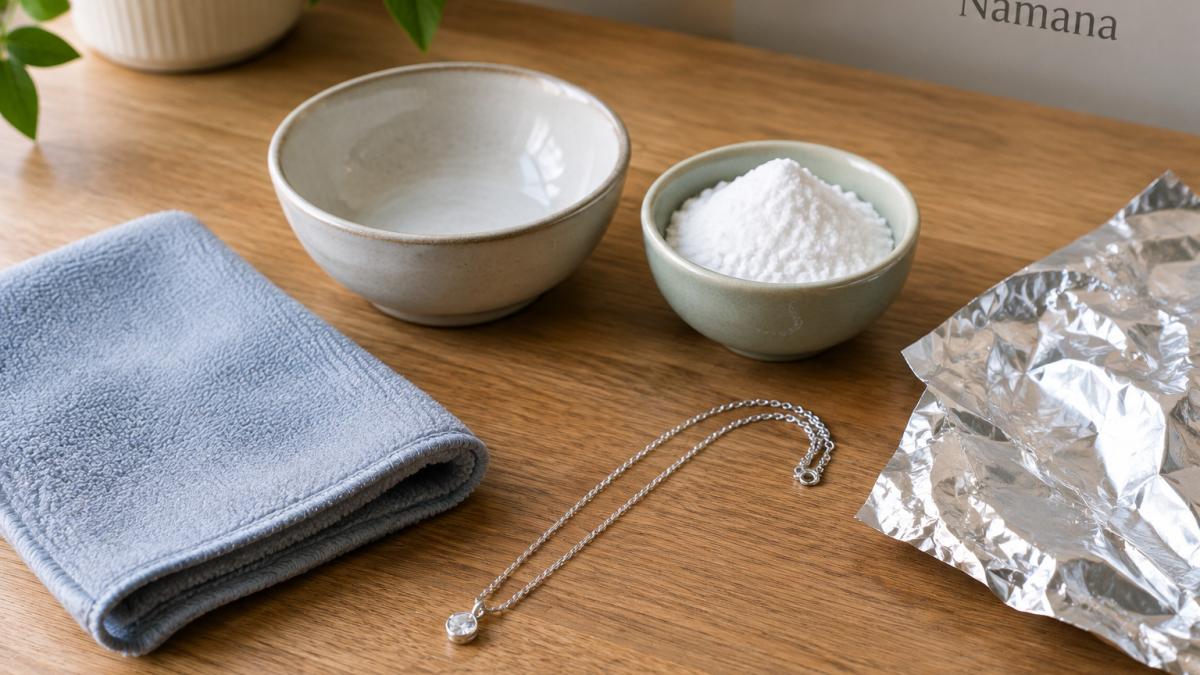
You do not need expensive products to clean sterling silver at home. Most of what you need is already in your kitchen. Gather these items before you begin:
- A bowl large enough to hold your jewellery
- Aluminium foil
- Bicarbonate of soda (baking soda)
- Hot water from the tap
- A soft microfibre cloth
- A soft-bristled toothbrush for detailed areas
- Mild washing-up liquid, if the piece is dirty or greasy
Keep your work area clear and place a towel on the worktop. This protects both your jewellery and your surfaces from splashes.
Step-by-Step: Cleaning Sterling Silver with Baking Soda and Foil
This method uses a simple chemical reaction. The aluminium foil draws the sulphur away from the silver, and the bicarbonate of soda helps lift the residue.
Follow these steps:
- Line the bowl with aluminium foil, shiny side up.
- Add hot water, enough to cover your jewellery.
- Stir in one tablespoon of bicarbonate of soda for every cup of water.
- Place your silver in the bowl so each piece touches the foil.
- Leave it for two to five minutes. You may see the tarnish lift away.
- Lift the pieces out with a spoon or tongs and rinse them under cool water.
- Dry immediately with a soft microfibre cloth.
Watch out: Do not leave silver soaking for long periods. Prolonged immersion can leave a dull or uneven finish.
Is Toothpaste Bad for Sterling Silver?
Many people reach for toothpaste when they want a quick polish. Toothpaste is not a good choice for sterling silver. Most toothpastes contain abrasives that scratch the surface, leaving fine marks that dull the shine over time. Some whitening formulas are more abrasive still.
A gentle, non-abrasive approach is safer. Stick to bicarbonate of soda, a little mild washing-up liquid, or a dedicated silver polishing cloth. Your jewellery will look better for longer.
Cleaning Silver Jewellery with Gemstones Safely
Gemstones need extra care. Many stones are softer than sterling silver and can be damaged by the same methods that work on plain metal. Soft or porous stones may also absorb moisture or cleaning solutions, which can change their colour or finish.
Use these guidelines when cleaning pieces with stones:
- Use only warm water and a drop of mild washing-up liquid
- Clean with a soft-bristled brush, working gently around the setting
- Avoid the foil and bicarbonate method for stones, as the reaction can affect some gems
- Remove the piece before swimming, showering, or applying lotion or perfume
- Dry thoroughly and store separately to prevent scratching
The Sterling Silver Infinity Necklace with Cubic Zirconia (https://namana.london/products/sterling-silver-infinity-necklace-with-cubic-zirconia) features AAA cubic zirconia stones, so keeping it clean with gentle soap and water is a sensible approach.

Choosing the Best Silver Polishing Cloth for Jewellery
A good polishing cloth is one of the simplest tools for keeping silver bright between deeper cleans. Look for a cloth that is:
- Made from soft, lint-free microfibre or cotton
- Impregnated with a mild polishing agent, if you prefer a faster result
- Large enough to cover the whole piece in a few strokes
- Used only on dry silver to avoid streaks
A polishing cloth works best as a maintenance tool. Wipe your pieces after each wear to remove oils and moisture. Browse plain polished sterling silver hoop earrings that are simple to keep clean and wear often.

How to Prevent Sterling Silver from Tarnishing Again
Prevention saves you time. A few habits make a clear difference:
- Store pieces in an airtight bag or box, with an anti-tarnish strip if you have one
- Keep jewellery away from humidity, such as bathrooms
- Put your jewellery on last, after perfume, hairspray, and lotion
- Wipe pieces with a soft cloth after wearing them
- Avoid rubber, wool, and some latex, which can speed up tarnishing
The Sterling Silver Wishbone Pendant Necklace for Women (https://namana.london/products/sterling-silver-wishbone-pendant-necklace) is rhodium plated, and gentle care helps keep its finish looking its best.

Frequently Asked Questions
How often should I clean sterling silver?
Wipe your jewellery after each wear and clean it more thoroughly when you see visible tarnish. Regular light cleaning keeps deep cleaning to a minimum.
Can I clean silver-plated jewellery the same way?
Use the same gentle approach, but be careful. Silver plating is thin, and harsh rubbing can wear through it. Check the piece before deciding how hard to clean.
Is it safe to use vinegar or lemon juice?
Acidic liquids can damage some metals and stones. A gentle soap-and-water method is the safer choice for everyday care.
Shop Namana's sterling silver jewellery and find a piece you will love wearing and caring for.
Caring for your silver is easy once you have the right habits. At Namana, we design sterling silver jewellery that is built to shine with gentle care.
Frequently Asked Questions
What is the best way to clean sterling silver at home?
For lightly tarnished pieces, the baking soda and aluminium foil method is a common home option. Line a bowl with foil, add warm water and a spoonful of bicarbonate of soda, then soak the jewellery for a few minutes. Rinse it under lukewarm water, dry it immediately with a microfibre cloth and buff gently. Heavily tarnished pieces may need a second round, and stones such as pearls or opals should not be soaked.
Can I use baking soda to clean sterling silver?
Yes. Bicarbonate of soda is a mild alkaline agent that helps lift tarnish when paired with aluminium foil, which triggers a chemical reaction that draws sulphur compounds off the silver's surface. Use it in warm water rather than as a dry scrub, rinse thoroughly and dry the piece straight away, because any residue left in crevices can dull the finish over time.
How often should I clean my sterling silver jewellery?
Most people only need to clean sterling silver when tarnish becomes visible, which depends on how often the piece is worn and where it is kept. Pieces worn daily and exposed to moisture, perfume or skin oils may need attention every few weeks, while items stored in an airtight container may stay bright for months. Gentle cleaning after each wear is the simplest way to slow the build-up.
Does sterling silver tarnish quickly?
Sterling silver is an alloy of 92.5 per cent silver and 7.5 per cent other metals, usually copper, and it tarnishes when silver reacts with sulphur in the air to form a dark layer of silver sulphide. The speed depends on humidity, air quality and skin chemistry, so a piece kept in a dry drawer will generally tarnish more slowly than one worn daily and left on a bathroom shelf.
