

7 Ways to Layer Necklaces Without Tangling
Last Updated: 26 October 2026
Quick Summary
To layer necklaces without tangling, select pieces in distinctly different lengths such as a 35-40 cm choker, 45-50 cm standard length, and 60-75 cm longer piece. This length variation keeps each necklace in its own space on the neck and chest, preventing chains from wrapping around each other.
- Use a necklace layering clasp with multiple attachment points to keep chains separated at the back of the neck.
- Pair delicate pieces with one heavier anchor chain to stabilise lighter necklaces and prevent shifting.
- Store each necklace individually in pouches or hang them on a jewellery stand to prevent tangling before wear.
- Vary metal finishes and chain styles to create visual distinction between layers and an intentional appearance.
Table of Contents
- Why Necklace Layering Requires the Right Technique
- Choosing the Right Necklace Lengths for Layering
- Using a Necklace Layering Clasp to Prevent Tangles
- Mastering Techniques for Layering Delicate Necklaces
- Styling Tips to Keep Layers Separate and Elegant
- How to Store Necklaces Without Tangling
- Building Your Layered Necklace Collection
- Frequently Asked Questions
Why Necklace Layering Requires the Right Technique
Layering necklaces creates a sophisticated, personalised look that elevates everyday style. But without the right approach, multiple chains tangle into a frustrating mess. The key to successful layering is understanding how different lengths, weights, and materials interact when worn together.
Necklace layering has become a popular way to express individuality and create depth in jewellery styling. The challenge most people face is preventing chains from knotting around each other, especially when wearing delicate pieces throughout the day. A few simple techniques and thoughtful choices about which pieces to combine make all the difference between an elegant layered look and a tangled disaster.
Namana offers a carefully curated collection of sterling silver and fashion jewellery designed specifically for everyday wear, including pieces that work beautifully in layered combinations. Understanding the fundamentals of how to layer necklaces without tangling ensures that whatever pieces a person chooses, they'll be able to wear them confidently and comfortably.
Choosing the Right Necklace Lengths for Layering
The foundation of successful necklace layering starts with selecting pieces in distinctly different lengths. When chains are too similar in length, they sit against the skin in the same spot and tangle easily. Varying lengths allows each necklace to occupy its own space on the neck and chest.
Most stylists recommend working with three key length zones:
- Choker or short necklace: 35-40 cm, sitting close to the neck
- Standard length: 45-50 cm, resting at the collarbone
- Long or statement length: 60-75 cm, falling to the mid-chest or lower
Each layer should be visibly distinct. A 45 cm necklace and a 48 cm necklace will overlap and tangle. But a 40 cm choker, a 50 cm mid-length piece, and a 65 cm longer chain create clear separation between each layer.
Fashion styling guides on layering proportions confirm that spacing between layers prevents tangling and creates visual balance. The greater the difference in length between pieces, the less likely they are to knot together.
When building a layered collection, consider starting with one piece in each zone. The 925 Sterling Silver 18, 24 or 30 inch long Chain Necklace with Cubic Zirconia Stones from Namana offers flexible length options to help create this variety. Choosing necklaces with extension chains also adds flexibility; a 50 cm necklace with a 5 cm extension can adjust between 50-55 cm depending on how the clasp is fastened, allowing subtle length adjustments without buying multiple pieces.

Most stylists recommend working with three key length zones to create clear separation between layers.
| Length zone | Length range | Positioning |
|---|---|---|
| Choker or short | 35-40 cm | Sitting close to the neck |
| Standard length | 45-50 cm | Resting at the collarbone |
| Long or statement | 60-75 cm | Falling to mid-chest or lower |
Using a Necklace Layering Clasp to Prevent Tangles
A necklace layering clasp is a simple hardware solution designed specifically to keep multiple chains separated. These clasps have multiple attachment points, allowing two or three necklaces to be fastened to the same clasp while remaining visibly distinct and untangled.
Layering clasps work by creating physical separation between chains at the fastening point. Instead of all necklaces connecting to a single loop, each chain attaches to its own loop on the clasp. This prevents them from wrapping around each other at the back of the neck, which is where most tangling begins.
Layering clasps come in several styles:
- Dual-attachment clasps: designed for two necklaces
- Triple-attachment clasps: accommodate three chains simultaneously
- Magnetic clasps: use magnetic force to keep chains aligned and separated
- Adjustable clasps: allow repositioning of attachment points for custom spacing
The advantage of using a layering clasp is that it solves the tangling problem at its source. Rather than managing three separate clasps at the back of the neck, a single layering clasp keeps all chains organised and prevents them from wrapping around each other throughout the day.
For those who prefer not to use a specialised clasp, simply ensuring that necklaces have significantly different lengths achieves similar results. The length difference keeps chains naturally separated during wear.
Mastering Techniques for Layering Delicate Necklaces
Delicate necklaces, thin chains, dainty pendants, and lightweight pieces, require extra care when layering because they're more prone to tangling than thicker, heavier chains. The lighter the piece, the more easily it can shift and wrap around other layers.
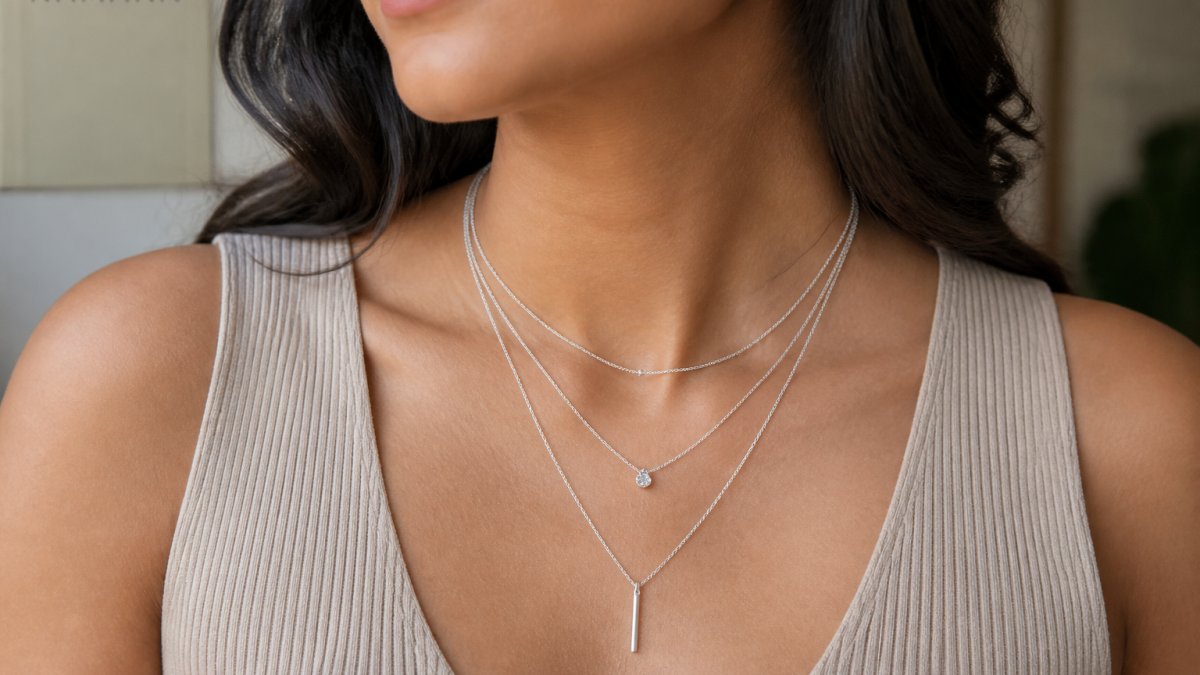
Several techniques help keep delicate pieces stable and untangled:
Pair delicate pieces with one heavier anchor chain. A thicker, more substantial necklace acts as a stabiliser. The heavier chain sits in place while lighter pieces layer above or below it. This creates a visual anchor and prevents the delicate chains from shifting and tangling around the heavier piece.
Use necklaces with different pendant weights. A delicate chain with no pendant will shift more easily than one with a small pendant. The pendant's weight keeps the chain in place.
Avoid layering more than three delicate pieces. The more necklaces worn together, the more opportunities for tangling. Three delicate pieces is typically the maximum before the risk of tangling increases significantly. If wearing more than three necklaces, at least one should be a thicker, more substantial chain.
Keep delicate chains separated by at least 5 cm in length. The greater the length difference, the less likely delicate chains are to overlap and tangle.
Delicate sterling silver necklaces, like those in Namana's collection, are designed with precision to balance elegance with durability. When layering delicate pieces, the rhodium plating on sterling silver jewellery adds a protective layer that helps the chains maintain their shape and prevents premature wear.
Styling Tips to Keep Layers Separate and Elegant
Beyond length and weight, styling choices determine whether layered necklaces look intentional and polished or accidental and cluttered. A few key principles ensure that layers remain visually distinct and elegant throughout the day.
Choose necklaces with complementary, not identical, styles. Mixing a classic tennis chain with a delicate link chain creates visual interest. Pairing a pendant necklace with a chain-only piece adds dimension. Avoid wearing three identical chain styles, which can look repetitive rather than intentional.
925 Sterling Silver Skinny Choker Necklace for Women with Cubic Zirconia Stones →
Vary the metal finishes if possible. Sterling silver, rose gold, and yellow gold can layer beautifully together. Mixing finishes creates contrast and makes each layer visually distinct.
Position pendants at different heights. If wearing necklaces with pendants, ensure the pendants sit at different points on the chest.
Consider the neckline of the outfit. High necklines (polo necks, crew necks) work best with longer layered necklaces that fall below the neckline. Lower necklines (V-necks, scoop necks) allow chokers and shorter layers to be visible.
Professional styling advice on jewellery layering emphasises that intentional styling choices make layered necklaces look curated rather than accidental.
The How to Style Layered Necklaces for Beginners guide offers practical styling techniques that complement the layering methods covered here. Building confidence in styling helps wearers experiment with different combinations and find what works best for their personal aesthetic.
How to Store Necklaces Without Tangling
Proper storage prevents tangling before it starts. Many necklaces become knotted during storage, making it difficult to wear them layered or separately. A few storage methods keep chains untangled and ready to wear.
Use individual jewellery pouches or boxes. Storing each necklace in its own pouch prevents chains from wrapping around each other. Small silk pouches or soft cloth bags protect delicate pieces while keeping them separate. This method works well for valuable or delicate necklaces that are worn frequently.
Hang necklaces on a jewellery stand or wall hooks. Vertical storage naturally prevents tangling because chains hang straight down. A jewellery stand with multiple hooks or pegs allows each necklace to have its own space.
Store necklaces flat in a drawer with dividers. A drawer organiser with separate compartments keeps each necklace isolated. Laying chains flat rather than coiling them reduces the risk of knotting. This method works best for necklaces that are worn less frequently.
Avoid tangled storage in boxes or bags. Throwing multiple necklaces into a single box or pouch is the fastest way to create tangles. Even short-term storage this way can result in knotted chains that take time to untangle.
Can You Wear Sterling Silver in the Shower? covers care guidance for layered necklaces, including storage tips that protect the material and prevent damage that could make chains more prone to tangling.
Building Your Layered Necklace Collection
Creating a versatile layered necklace collection means selecting pieces that work together in multiple combinations. Rather than buying random necklaces, a strategic approach ensures that pieces complement each other and create different looks.
Start by identifying the three length zones: choker (35-40 cm), standard (45-50 cm), and long (60-75 cm). Choose at least one piece in each zone. These three pieces alone create multiple layering combinations.
Next, consider metal finishes and styles. Sterling silver is a versatile choice that pairs well with other metals and works across seasons. Fashion jewellery in brass or stainless steel offers additional options for creating contrast and variety without significant investment.
Think about how often each piece will be worn. Necklaces worn multiple times per week should be durable materials like sterling silver that resist tarnishing and maintain their appearance.
Best Durable Jewellery for Everyday Wear: 2026 Guide provides guidance on selecting pieces that withstand regular layering and daily wear.
Consider starting with:
- One delicate choker necklace (35-40 cm)
- One classic mid-length chain (45-55 cm)
- One longer statement piece (65-75 cm)
- One pendant necklace in any of these lengths for variety
This foundation allows for multiple layering combinations. Adding one piece at a time ensures that each new necklace works with existing pieces rather than creating a collection of items that don't layer well together.
Namana's collection includes pieces designed for layering, with options across different lengths and styles. The 925 Sterling Silver Skinny Choker Necklace for Women with Cubic Zirconia Stones and 925 Sterling Silver Marquise Choker Necklace for Women with Cubic Zirconia Stones offer choker options, whilst the 55-inch Long Stylish Pearl Necklace for Women with White Shell Pearls provides a longer layering piece.


Layering necklaces without tangling becomes effortless once the fundamentals are understood. Selecting pieces in different lengths, using appropriate storage methods, and styling with intention transform layering from a frustrating challenge into a rewarding way to express personal style.
Frequently Asked Questions
How do you layer necklaces without them tangling?
The key is spacing: vary your necklace lengths so each sits at a different point on your neck, use a layering clasp to keep chains separate, and choose pieces with different chain weights. Avoid wearing too many delicate chains together, and always store layered pieces separately. Sterling silver necklaces with rhodium plating, like those from Namana, are less prone to tangling because the smooth finish reduces friction between chains.
What necklace lengths work best for layering?
Start with a choker or short necklace (around 30-35cm), add a mid-length piece (40-45cm), and finish with a longer strand (50cm or more). This staggered approach prevents chains from sitting on top of each other. Namana's 925 sterling silver chain necklaces come in 45cm, 60cm, and 75cm options with extension links, making it easy to find complementary lengths for a polished layered look.
Does a necklace layering clasp actually prevent tangling?
Yes. A necklace layering clasp holds multiple chains in place at the back of your neck, keeping them from twisting together. It's especially effective for delicate necklaces that tangle easily. If you don't have a dedicated layering clasp, you can achieve similar results by fastening each necklace separately and ensuring they have different lengths so they naturally sit apart.
How should you store layered necklaces to prevent tangles?
Never store layered necklaces together. Keep each piece in its own compartment, jewellery box, or pouch. For longer necklaces, coil them loosely or hang them on individual hooks. Store delicate sterling silver pieces away from moisture and direct sunlight to prevent tarnishing. Namana necklaces arrive in specially designed jewellery boxes; use these for storage to maintain both condition and organisation.
